

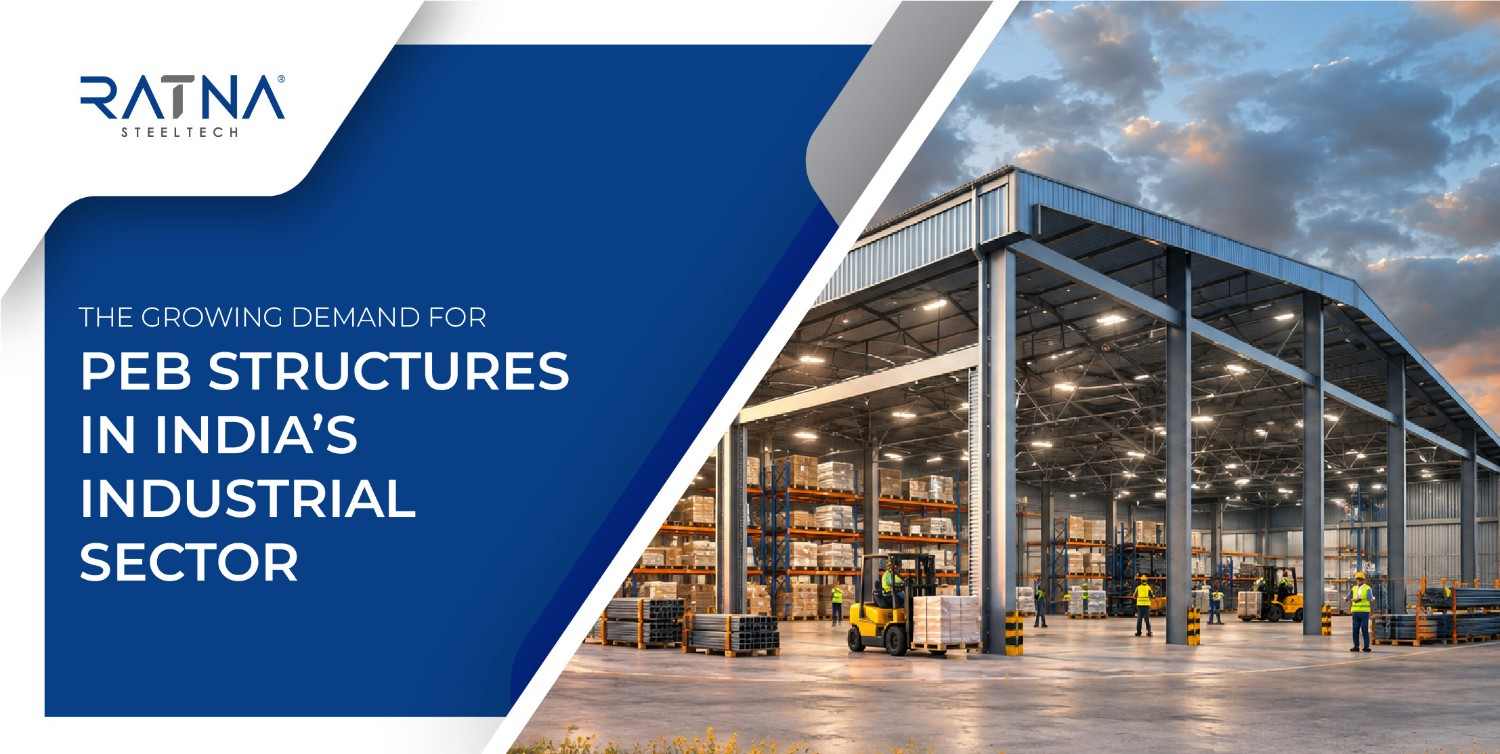
India’s rapid industrial and infrastructure development is transforming not only where businesses build, but also how they approach industrial construction. The expansion of manufacturing facilities, warehouses, logistics centres, processing units and other industrial infrastructure is creating a growing need for construction systems that offer speed, structural efficiency, design flexibility and reliable project execution.
Against this backdrop, Pre-Engineered Buildings (PEBs) are gaining increasing attention as an efficient solution for industrial and commercial construction. By integrating engineering, fabrication and site erection into a coordinated process, PEB systems can help project owners and contractors manage construction schedules while meeting specific operational and structural requirements.
Why Is Demand for Pre-Engineered Buildings Increasing in India?
Traditional construction methods continue to be suitable for many applications. However, industrial projects often have more specialised requirements, including large clear spans, greater building heights, equipment loads, crane provisions, efficient material movement, future expansion and tight construction schedules.
A Pre-Engineered Building is an engineered steel building system in which the structural components are designed according to the project’s specific requirements and subsequently fabricated under controlled manufacturing conditions before being transported to the site for erection.
Several factors are contributing to the increasing adoption of PEB structures across India’s industrial sector.
1. Faster and More Efficient Project Execution
For industrial businesses, construction timelines can directly influence the commencement of production, warehousing or commercial operations. Delays in building completion can consequently affect project schedules and investment returns.
PEB systems allow major structural components to be fabricated off-site and assembled at the project location according to a planned erection sequence. This can significantly reduce the amount of fabrication and structural work required at the construction site.
Factory-based manufacturing also provides greater control over fabrication processes, dimensional accuracy and production consistency, supporting more organised project execution.
2. Growth of Manufacturing, Warehousing and Logistics Infrastructure
India’s expanding manufacturing ecosystem, e-commerce activity, logistics networks and industrial investments are driving demand for new factories, warehouses, distribution centres and industrial sheds.
These facilities often require structures that can accommodate specific production layouts, storage systems, machinery, material-handling equipment and future expansion.
PEB systems are well suited to these requirements because the building can be engineered around the operational needs of the facility rather than relying on a standardised building configuration.
3. Efficient Utilisation of Structural Steel
One of the key advantages of PEB construction is its project-specific engineering approach.
Instead of relying exclusively on standard structural sections throughout a building, PEB systems use engineered primary and secondary members selected according to structural loads, spans, building dimensions, environmental conditions and applicable design requirements.
This approach can help optimise steel utilisation while maintaining the required structural performance. It can also contribute to better control of building weight, fabrication requirements, transportation and overall project economics.
4. Greater Design Flexibility and Future Expansion
Industrial facilities frequently evolve as businesses expand their production capacity or modify their operations. A building may therefore need to accommodate additional equipment, storage areas, production lines or other operational requirements.
PEB structures can be engineered with specific provisions for expansion, additional loads, openings, mezzanine floors, crane systems and other project-specific requirements, subject to the structural design.
This flexibility makes PEB systems particularly relevant for businesses looking for industrial buildings that can adapt to changing operational needs.
The Role of Steel Pipes and Hollow Sections in PEB Projects
While the primary PEB frame is responsible for carrying the principal structural loads, steel pipes and hollow sections can play important roles in supporting structural and ancillary applications, depending on the project design.
These products may be used for applications such as bracing systems, supports, secondary structures, service structures, fabricated assemblies and other project-specific requirements.
The selection of an appropriate pipe or hollow section depends on several factors, including:
- Section size and geometry
- Wall thickness
- Material grade
- Design loads
- Connection requirements
- Fabrication requirements
- Applicable Indian Standards and project specifications
- Dimensional tolerances and manufacturing quality
Therefore, selecting a suitable steel tube or hollow-section supplier should involve more than comparing the purchase price. Contractors, fabricators and project owners should also evaluate manufacturing capability, dimensional consistency, material specifications, quality-control systems, testing facilities and supply reliability.
Why Gujarat Is an Important Market for PEB Development
Gujarat has developed a strong industrial ecosystem supported by manufacturing, engineering, chemicals, pharmaceuticals, logistics, agriculture, infrastructure and other industrial sectors.
The state’s established industrial corridors and manufacturing clusters continue to create opportunities for factories, warehouses, industrial sheds, processing facilities and other steel-intensive infrastructure.
This makes Gujarat an important market for PEB structures as well as structural steel products such as MS ERW pipes and hollow sections.
For contractors and fabricators sourcing steel products in Gujarat, working with manufacturers located within or close to the region can also provide advantages in terms of logistics coordination, supply planning, technical communication and project scheduling.
An experienced steel manufacturer can be particularly valuable when a project requires multiple sizes, consistent specifications, coordinated deliveries or material supply aligned with fabrication and erection schedules.
What Should Industrial Buyers Look for in a PEB Manufacturer?
Choosing a PEB partner is an important decision because a PEB project involves much more than the fabrication of steel members. It requires coordination between engineering, procurement, fabrication, quality control, logistics and site erection.
Before selecting a PEB manufacturer, industrial project owners and contractors should evaluate:
- Engineering and structural design capabilities
- Design detailing and shop-drawing expertise
- Raw-material inspection and traceability
- Fabrication infrastructure and manufacturing capacity
- Cutting, drilling and welding capabilities
- Welding procedures and quality controls
- Non-Destructive Testing (NDT), where required
- Surface preparation, blasting and painting facilities
- Dimensional and final quality inspection
- Documentation and material certificates
- Transportation and delivery planning
- Site erection capabilities and technical support
- Experience with similar industrial projects
A well-coordinated manufacturing and erection process can help reduce execution-related challenges and improve overall project control.
Ratna Steeltech – Integrated PEB and Steel Manufacturing Capabilities
Ratna Steeltech provides integrated engineering, fabrication and erection solutions for Pre-Engineered Buildings and industrial steel structures.
Its PEB project process covers key stages including engineering and detailing, Bill of Materials preparation, raw-material inspection, cutting and drilling, structural fabrication, Non-Destructive Testing (NDT), blasting, painting, final inspection and site erection.
In addition to PEB solutions, Ratna Steeltech manufactures MS ERW pipes and steel tubes through its manufacturing facility in Gujarat. This enables the company to support industrial requirements across structural steel buildings, steel tubes and related applications.
By combining engineering expertise, manufacturing capabilities and project execution support, Ratna Steeltech aims to provide customers with coordinated steel solutions tailored to their project requirements.
The Future of PEB Structures in India’s Industrial Growth
As Indian businesses continue to invest in manufacturing capacity, warehousing, logistics and processing infrastructure, construction requirements are increasingly being evaluated in terms of speed, structural efficiency, flexibility, quality and long-term operational requirements.
Pre-Engineered Buildings offer a practical approach to these priorities by allowing the building structure to be engineered around the specific requirements of the facility.
For contractors, structural consultants, fabricators and industrial project owners planning factories, warehouses, industrial sheds, logistics facilities or specialised steel structures, selecting the right PEB manufacturer can have a significant impact on project execution.
With integrated engineering, fabrication and erection capabilities, along with in-house manufacturing of MS ERW pipes and steel tubes, Ratna Steeltech can support industrial projects from design and fabrication through to material supply and site erection.
Planning a new industrial building or PEB project? Contact Ratna Steeltech to discuss your project requirements and explore a suitable steel building solution.
Frequently Asked Questions
What are Pre-Engineered Buildings?
Pre-Engineered Buildings are engineered steel building systems designed according to specific project requirements. Major structural components are manufactured in a controlled factory environment and subsequently transported to the site for assembly and erection.
Why are PEB structures preferred for industrial buildings?
PEB structures can offer faster construction, controlled factory fabrication, design flexibility, efficient utilisation of structural steel and the ability to accommodate project-specific requirements such as large spans, equipment provisions and future expansion.
What is the difference between PEB and conventional construction?
PEB construction relies substantially on engineered and factory-fabricated steel components that are assembled at the project site. Conventional construction may involve a greater proportion of site-based fabrication and construction activities and can use different structural systems depending on the project.
Where are PEB structures commonly used?
PEB structures are widely applicable to factories, warehouses, industrial sheds, logistics facilities, manufacturing units, workshops, hangars, processing facilities and various other commercial and industrial buildings.
How should I choose a PEB manufacturer in India?
When selecting a PEB manufacturer, consider its engineering capabilities, fabrication infrastructure, quality-control systems, material traceability, welding and testing procedures, project experience, erection capabilities and ability to customise the building according to your operational requirements.
Can steel pipes and hollow sections be used in PEB projects?
Yes. Depending on the structural design and project requirements, steel pipes and hollow sections can be used for bracing, supports, secondary structures, service structures and other fabricated applications. Selection should be based on the required section, thickness, material grade, loading conditions, connection design and applicable standards.