

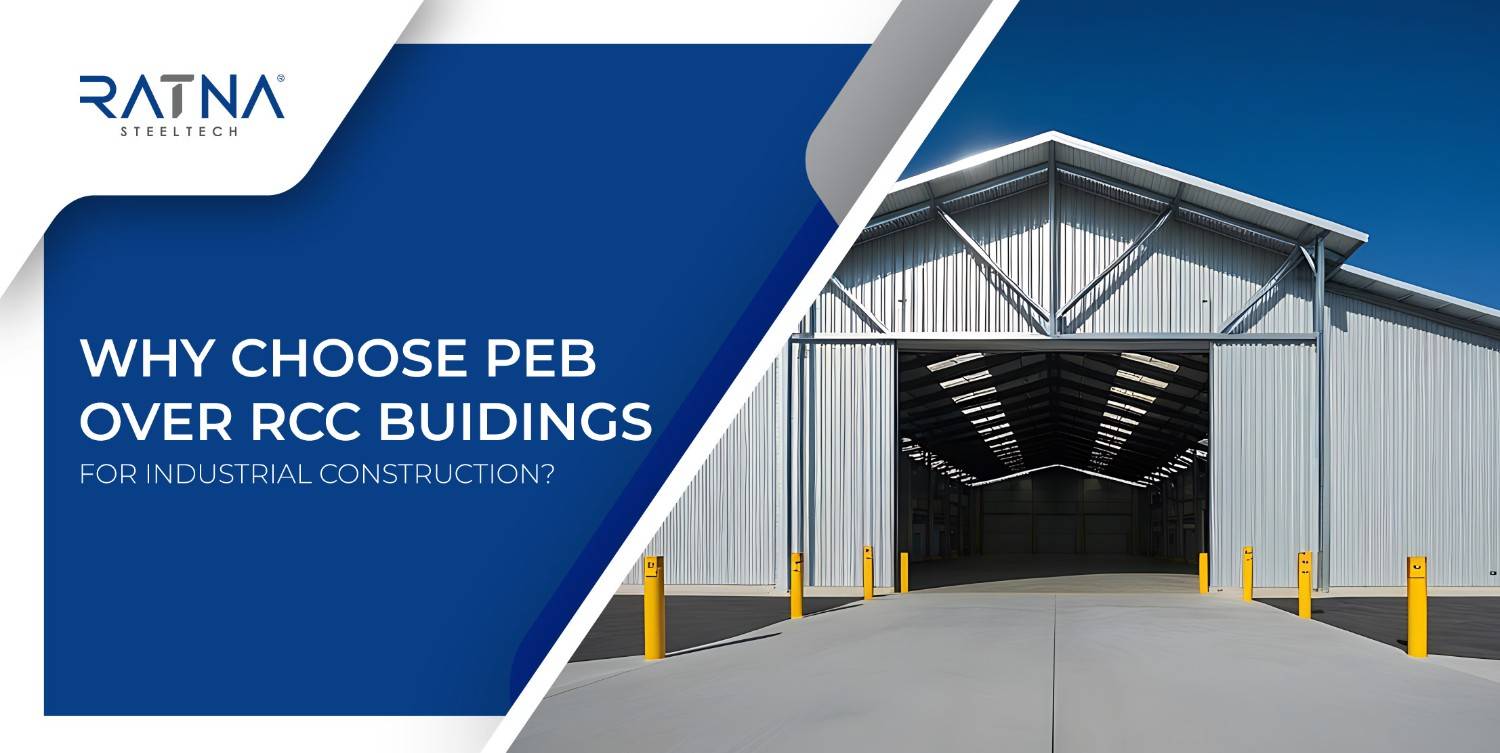
Industrial construction in India is undergoing a significant transformation as businesses prioritise faster execution, cost efficiency, structural flexibility, and long-term operational performance. While Reinforced Cement Concrete (RCC) structures have traditionally been widely used, Pre-Engineered Buildings (PEBs) are increasingly becoming the preferred choice for warehouses, factories, logistics hubs, and manufacturing facilities.
The decision between PEB vs RCC buildings is no longer just a construction preference—it is a strategic business choice that directly impacts project timelines, scalability, maintenance requirements, and overall operational efficiency.
Understanding PEB Structures vs RCC Construction
A PEB structure is designed and manufactured using pre-engineered steel components produced in a controlled factory environment and assembled on-site. These systems are precisely engineered for load efficiency, material optimisation, and rapid installation.
In contrast, RCC construction involves conventional on-site processes such as shuttering, reinforcement, concreting, and curing. While RCC remains suitable for certain applications, industrial projects today demand speed, adaptability, and scalability—areas where PEB structures offer clear advantages.
Faster Project Completion
One of the most significant advantages of PEB systems is reduced construction time. In industrial development, time-to-operation directly influences business returns and productivity.
PEB components are fabricated simultaneously with site preparation, enabling quick on-site assembly using pre-engineered bolted connections. This parallel execution significantly shortens project timelines.
RCC construction, on the other hand, follows a sequential and labour-intensive process, including curing periods that extend overall completion time.
For industries such as manufacturing, warehousing, and logistics, faster execution translates into quicker operational readiness and improved return on investment.
Cost Efficiency and Optimised Design
A key factor in the PEB vs RCC buildings comparison is cost efficiency.
PEB structures are designed using advanced engineering principles that optimise material usage without compromising strength. Their lightweight design reduces foundation requirements, resulting in additional cost savings.
RCC buildings typically involve higher material consumption, increased labour dependency, and longer construction durations, all of which contribute to higher overall costs.
PEB systems provide greater cost predictability, making them a preferred solution for industrial investors focused on efficient capital deployment.
Structural Flexibility and Future Expansion
Modern industrial facilities often require scalability to accommodate future growth, process changes, or capacity expansion.
PEB structures are inherently modular, allowing for easy expansion and modification, including:
- Expansion of floor space
- Increased storage capacity
- Internal layout modifications
- Integration of new machinery or utilities
RCC structures, by comparison, are rigid and require extensive structural modifications for expansion, often leading to operational disruption and higher costs.
Efficiency in Industrial Shed Construction
In industrial shed construction, design efficiency plays a crucial role in operational productivity.
PEB sheds are engineered for large clear spans with minimal internal columns, enabling unobstructed movement of machinery, materials, and personnel. This improves workflow efficiency and space utilisation.
Additional advantages include:
- Faster roofing and structural installation
- Better ventilation integration
- Simplified utility routing
- Easier maintenance access
RCC structures typically involve more internal supports, which may limit usable space and flexibility.
Durability and Low Maintenance
PEB structures are manufactured using high-grade steel with protective coatings that enhance corrosion resistance and durability.
Compared to RCC buildings, PEB structures generally require:
- Lower maintenance frequency
- Easier inspection and repair
- Reduced long-term upkeep costs
RCC structures may develop issues such as cracks, seepage, or surface deterioration over time, particularly in demanding industrial environments.
This makes PEB systems a more reliable long-term infrastructure solution for industrial applications.
Sustainability and Modern Construction Practices
Sustainability is now a key consideration in industrial building development in India.
PEB systems contribute to environmentally responsible construction through:
- Reduced material wastage
- Factory-controlled precision manufacturing
- Faster on-site execution
- Recyclable steel components
These factors significantly lower the environmental impact compared to conventional RCC construction methods.
Choosing the Right Structural System
The choice between PEB structure vs RCC building depends on project requirements, operational priorities, and long-term business objectives.
While RCC remains relevant for specific heavy civil and multi-storey applications, PEB systems are increasingly preferred for industrial facilities that require:
- Rapid construction
- Large clear spans
- Cost efficiency
- Expansion flexibility
- Low maintenance
This shift reflects the growing demand for smart, scalable, and future-ready industrial infrastructure.
Conclusion
The growing preference for PEB over RCC buildings highlights a clear shift toward efficiency-driven industrial construction. PEB systems offer faster execution, cost optimisation, structural flexibility, and superior operational performance, making them ideal for modern industrial needs.
As industries continue to expand, pre-engineered buildings are emerging as a strategic investment for companies seeking durable, scalable, and efficient infrastructure solutions.
At Ratna Steeltech, we deliver steel solutions that meet the evolving demands of pre-engineered building projects across industries. With a focus on quality and consistency, we help create stronger and more sustainable infrastructure.